For organizations·Offer it as a benefit

7 Checks for a Separate Newborn Hospital Bill

Content authorBy mediloopPublished onReading time11 min read
A warm, softly lit modern home office with a parent holding a newborn at a desk cluttered with hospital bills and a glowing laptop.

This article explains how to reduce medical bills when a hospital statement arrives in your newborn's name. It gives you seven checks to run in order and wording you can send to the hospital and your benefits administrator.

A bill with your baby's name on it

A statement arrived in your newborn's name, and the question you're asking is how to reduce medical bills for a person who is three weeks old. Start somewhere earlier than that. The balance in front of you is either a coverage problem that nobody fixed or a billing mistake, and those situations need different responses.

The work here is record-building. You gather the documents and line them up so the mismatches show themselves. Knowing how to reduce medical bills for a newborn starts with proving which charges belong to which patient and whether the baby's plan was active when the care happened. Everything after that is paperwork you can send.

Why babies get bills

Hospitals register a newborn as a separate patient with a separate medical record number. The mother's delivery stay is one account. The baby's nursery care and any neonatal intensive care unit (NICU) time sit on another, and the clinicians who treated the baby bill their professional fees on top of the facility charge. Two statements do not prove anybody made an error.

What separates a legitimate account from a medical bill overcharge is whether the service actually happened and whether it appears once. Federal data on complicated newborn stays put the average cost per stay at $13,232 in 2009, which is why small duplication problems on an infant account turn into large numbers fast. The Consumer Financial Protection Bureau has found that inaccurate bills reaching patients frequently trace back to missing or invalid claim data and incorrect codes.

For a newborn, the most common root cause is that the baby was never added to the plan, or was added under a name the insurer doesn't recognize, so the claim came back unpaid and the hospital turned to you.

Build an account map

Before you compare a single charge, build one table with two columns, one for the mother and one for the baby. You're trying to see, on one page, what the hospital thinks happened and what the insurer thinks happened. Most of what looks like a medical bill overcharge at first glance turns out to be two documents describing the same care in different vocabularies.

Pull these into the table for each patient:

  • Patient name exactly as printed, including temporary names like "Baby Boy Rivera"

  • Medical record number and the account or guarantor number on each statement

  • Member identifier and group number for the plan the care was billed to

  • Dates of service, admission and discharge dates, and the date of birth

  • Claim numbers and the patient responsibility figure from each explanation of benefits (EOB)

  • Deposits, prepayments, insurer payments, adjustments, and the current balance

The provider bill and the EOB are different documents with different jobs. The hospital's statement asks you for money. The insurer's EOB records how a claim was processed and is not a bill, which is why the two numbers disagree so regularly. If your statement shows only a total, request the line-by-line version using a written itemized bill request before you go further.

How to reduce medical bills

A minimalist flat vector design of an enrollment confirmation letter on a warm ivory background, featuring checkmarks and modern typography.

Run these seven checks in the order below. Each one depends on the answer from the one before it, so skipping ahead to a negotiation call wastes the call. And use your family's actual plan documents at every step, because learning how to reduce medical bills for a newborn means working from your employer's summary plan description or your state's program rules instead of general assumptions about newborn coverage.

If the balance survives all seven checks and is still accurate, that's not the end. An accurate bill you can't afford is a different problem with a different fix through a charity care application or a payment arrangement, and the last section covers how to reduce medical bills.

Before you pay it

Upload the bill to a free mediloop account. An automatic first look shows what looks worth questioning, usually in about a minute.

Check my bill for free →

Verify the patient identity

Put the statement and the EOB side by side and compare the baby's name character by character. Hospitals register infants under placeholder names, and the insurer's system holds the legal name you submitted on the enrollment form. A mismatch between "Baby Girl Chen" and "Mei Chen" is enough for a claim to reject, and the hospital has no visibility into why.

Then confirm the date of birth and the medical record number printed on each document. If newborn services are attached to the mother's record, that's a records problem before it's a billing problem. Under HIPAA, you can ask the hospital to amend the record, and the covered entity must act within 60 days on an amendment request. Fixing identity first is the quietest part of how to reduce medical bills, and it resolves more newborn balances than negotiation does.

Separate the accounts

Ask the billing office to confirm, in writing, which account number belongs to the mother and which belongs to the baby. Then ask where each deposit and prepayment landed. A delivery deposit paid at admission frequently sits on the mother's account while the infant account shows a full outstanding balance.

Two account numbers do not mean duplicate billing. Facility charges and professional charges are both legitimate, and CMS defines hospital items and services to include services of employed physicians reflected as professional charges alongside facility fees. What you're testing is whether the same service appears on both accounts.

Confirm plan enrollment

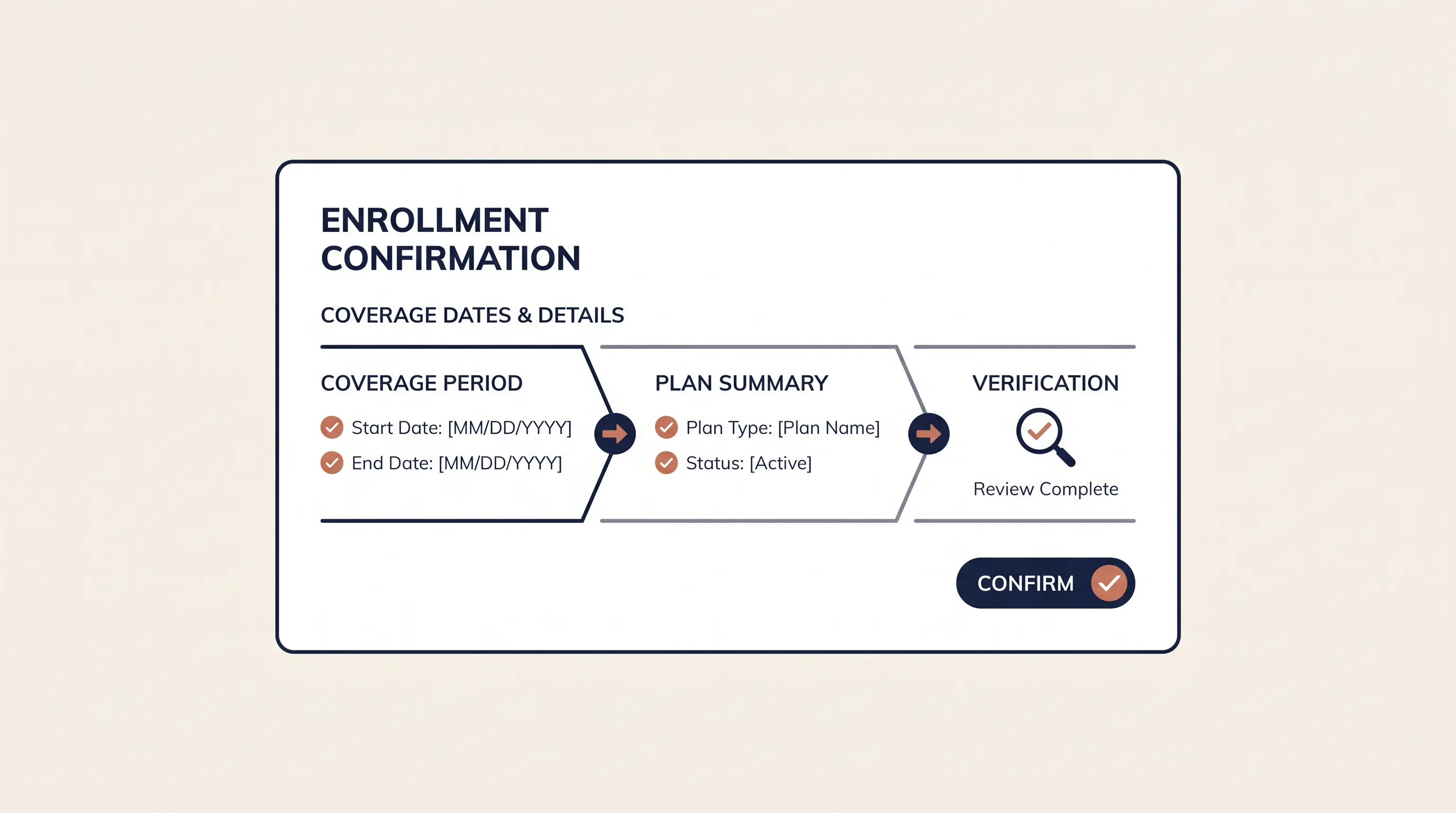
Hospital registration is not enrollment. The admitting clerk typed your insurance information into the hospital system, which tells the insurer nothing. Enrollment happens with your employer's benefits administrator or the Marketplace, and you need written confirmation of the baby's status and effective date.

For job-based coverage, the Department of Labor's guidance is direct: "You must request enrollment in the plan within 30 days of the birth, adoption, or placement for adoption." Through the Marketplace, the window is longer, and HealthCare.gov instructs families to apply within 60 days after the birth. Medicaid and CHIP accept applications at any time of year. Knowing how to reduce medical bills here means getting a dated email or letter naming the baby.

Check coverage dates

Compare the baby's birth date and each date of service against the effective date your plan or program confirmed in writing. Coverage that starts a month after birth leaves the entire nursery stay uncovered, and that gap is the explanation for most large newborn balances.

Timely enrollment closes the gap retroactively. The Department of Labor states that coverage for special enrollees is effective retroactive to the date of birth. If the mother had Medicaid on the date of delivery, the baby is deemed eligible, and CMS guidance requires the state to immediately issue a separate Medicaid identification number for the child once it learns a delivery occurred. Deemed newborn coverage continues until the child turns one regardless of changes in circumstances. Enrollment, though, is not the same as payment. A retroactive effective date tells the insurer to reprocess, and the claim still has to clear the plan's rules.

Before you pay it

Upload the bill to a free mediloop account. An automatic first look shows what looks worth questioning, usually in about a minute.

Check my bill for free →

Spot a medical bill overcharge

Now compare services. Take the baby's itemized hospital bill and match each line to a corresponding entry on an EOB. Then do the same for every separate clinician claim: the pediatrician who examined the baby and the laboratory that ran the newborn screen.

A medical bill overcharge looks like the same procedure on the same date appearing twice or a quantity that doesn't match what happened. What it does not look like is a pediatrician's claim arriving separately from the hospital's. Separate professional and facility charges for the same encounter are normal, and treating them as duplicates sends you into an argument you'll lose.

Review insurance processing

For each claim, ask the insurer one question: what is its status right now? The possible answers are narrow, and each points somewhere different:

  1. Not received, which means the hospital hasn't filed it or filed it with wrong member data

  2. Processed and paid, which means the remaining balance should match the EOB's patient responsibility figure

  3. Pending, which means you wait and the hospital holds the account

  4. Denied, which means you read the denial reason before doing anything else

Denials on newborn claims cluster around missing dependent data or an identifier that doesn't match the enrollment record. A denial for a service the plan genuinely excludes is a different animal from a denial for a data mismatch. Sorting the two is the step that decides whether how to reduce medical bills on this account means a correction or an appeal.

Reconcile every payment

Line up what the insurer paid and what you paid. Then subtract. If the hospital's balance exceeds the EOB's patient responsibility, ask the billing office to reconcile the difference and explain the gap in writing.

Don't pay a disputed figure while it's disputed. Ask for the balance to be placed on hold during the review and ask explicitly whether late fees and collection activity are paused, because a phone call alone doesn't stop the clock. Paying first also complicates a later charity care application, since you're asking for help with an amount you've already settled.

Not sure whether any of this applies to the statement in front of you? Upload it and check my bill for a free first look at the charges. Upload a photo or PDF, then verify your email to receive it.

Send targeted messages

Two written messages do most of the work. Send the first to your employer's benefits administrator or the Marketplace, and ask for the baby's enrollment status and the exact effective date. Ask for the reply in writing and keep it with your account map.

The second goes to the hospital's billing office. Name the account number and the patient and state what you want done. The request is to rebill the corrected insurer or to transfer a deposit to the right account. Then ask what the next billing date is and whether you need a separate charity care application form for the remaining balance after insurance reprocesses.

Decide the next step

What you do now for how to reduce medical bills depends on which check failed. If a claim is pending or being reprocessed, wait and keep the account on hold. If the insurer needs enrollment documents, send them and confirm receipt by email.

  • Hospital hasn't produced line-level detail: request the itemized bill in writing with a response date

  • Denial based on coverage or medical necessity: file an internal appeal, and under ERISA you have at least 180 days from the denial notice

  • Internal appeal exhausted: request external review within four months of the final denial

  • Charges confirmed accurate but unaffordable: ask patient financial services for the financial assistance policy

That last path is worth understanding before you need it. Nonprofit hospitals must maintain a written financial assistance policy and publicize it, and they cannot charge an eligible patient more than the amounts generally billed to insured patients for emergency or medically necessary care. The IRS also gives you time, as it requires hospitals to accept a charity care application for at least 240 days after the first billing statement before taking extraordinary collection action. A step-by-step guide to applying covers what income documents to send. Submitting a charity care application and disputing a medical bill overcharge are separate tracks, and you can run both at once, which is the practical answer to how to reduce medical bills that are partly wrong and partly unaffordable.

Before you pay anything

Work the checks in order and treat the baby's account as its own case with its own evidence. Most newborn balances shrink once enrollment is confirmed and the claim is reprocessed, and what remains is either correctable or eligible for a charity care application.

If you'd rather hand it over, upload the statement for a free first look through mediloop's Check my bill flow. A specialist reviews paid cases and handles supported provider conversations. Pay Per Bill is $129, refunded in full if we don't lower your bill by at least $129, terms apply, and that's a practical way to settle how to reduce medical bills in your newborn's name.

Before you pay it

Upload the bill to a free mediloop account. An automatic first look shows what looks worth questioning, usually in about a minute.

Check my bill for free →

Yes, but you shouldn't assume the balance is final. Ask the hospital to place the account on hold while the insurer processes or reprocesses the claim, and request written confirmation that collection activity and late fees are paused. Compare the final EOB with the revised statement before paying.

Ask the hospital and insurer to update the baby's name using the birth certificate or enrollment record, then request corrected documents and claim resubmission. Keep the original statements. A name change doesn't by itself prove duplicate billing, but inconsistent names can cause a claim rejection or delay.

No. Retroactive coverage tells the insurer to review services from the covered dates, but the claim still must use correct patient and member information and meet plan rules. This correction is part of how to reduce medical bills. Ask the hospital to rebill after enrollment is confirmed, then compare the new EOB with the remaining balance.

Request the hospital's financial assistance policy as soon as you know an accurate balance remains unaffordable. Ask whether the application can be filed while an insurance dispute continues, and keep proof of submission. For a nonprofit hospital, the policy explains eligibility, required documents, and application deadlines.

Yes. Mediloop's Check my bill flow lets you upload a photo or PDF for a free first look, then verify your email to receive it. It can help flag issues to investigate, but you should confirm corrections with the hospital and insurer. Paid specialist work is separate from the upload.

Not sure what applies to your bill? Check it for free.

Make a free mediloop account and upload the bill. An automatic first look reads the charges and shows what looks worth questioning, usually in about a minute.

You Might Also Like

More guides on paying less for your medical bills

Woman reviewing medical bills and financial documents at home while comparing paperwork beside her laptop

5 Places to Find Medical Bill Help in Your Existing Benefits

Before you pay anyone to fight a medical bill, check five places you already have access to. Those include your employer's benefits handbook and your insurer's member portal. They also include your Employee Assistance Program (EAP) and your union or association member site, plus HR or member services. Each one can hide a free advocacy or navigation vendor. Scope varies, so confirm what the service actually does.

Doctor speaking with a nurse at a hospital reception desk, with a patient being transported on a hospital bed in the background

Urgent Care Billed as an Emergency Room? Verify the Facility and Claim

This article walks through a records-first way to investigate a bill that charges emergency rates for what you thought was a walk-in visit, a case of urgent care billed as emergency room. It covers the documents to gather and how to check the facility's official designation, then how to read professional and facility claims separately and what to ask the provider and your insurer.

Woman reviewing medical bills and financial documents at home while comparing paperwork beside her laptop

Two Health Insurance Plans? How to Coordinate Benefits Before Paying

This article is a step-by-step walkthrough for anyone holding a medical bill with two insurance plans attached to the same date of service. It shows how to confirm which plan pays first and how to track the claim as it moves between them.

Patient lying on a medical imaging scanner table while a healthcare technician prepares the examination in a modern diagnostic imaging center

PET Scan Cost in the U.S.: Scan, Tracer and Radiologist Fees

This article explains how pet scan cost is set for a PET or PET-CT exam in the United States, piece by piece, so you can compare quotes that actually describe the same study. It covers the four charges that make up the total and how to compare cash and insurance figures.